
Diabetic Foot Ulcers
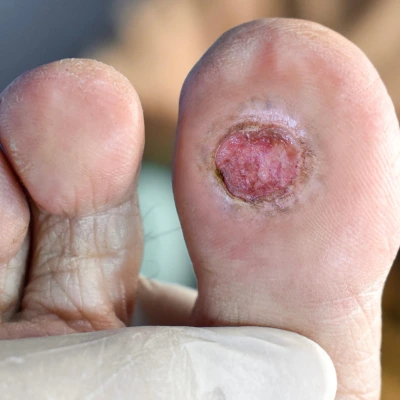
Diabetic Foot Ulcers
🦶 Diabetic Foot Ulcers
📌 What Are They?
A diabetic foot ulcer is a wound or sore that develops on the feet of people with diabetes. High blood sugar can damage blood vessels and nerves, leading to poor circulation and loss of sensation in the feet. This makes even small injuries slow to heal and more likely to get infected.
Why Are They Serious?
❌ Slow Healing → Minor cuts can turn into large wounds
🦠 Infections → Higher risk of spreading to bone or blood
🩸 Poor Circulation → Reduced oxygen supply delays recovery
⚡ Nerve Damage → Patients may not feel pain, so ulcers go unnoticed
If untreated, severe ulcers may lead to amputation.
🧪 Symptoms to Watch For
🔴 Redness, swelling, or warmth in the foot
💧 Fluid or pus discharge from a sore
🦶 Open wounds or blisters that don’t heal
🦴 Pain (or sometimes no pain due to nerve damage)
🌑 Darkening or black skin (sign of poor blood supply)
🏥 Treatment Options
💊 Blood Sugar Control → Essential for healing
🧼 Wound Care → Cleaning, dressing, and infection control
👟 Offloading → Special footwear to reduce pressure on ulcers
🩺 Medications / Antibiotics → For infection management
✂️ Surgery → Removal of dead tissue or correction of deformities
🔄 Vascular Treatment → Restoring blood flow if circulation is poor
✅ Prevention Tips
👀 Check feet daily for cuts, blisters, or color changes
🧼 Keep feet clean and dry
👟 Wear protective, well-fitted footwear
🚭 Avoid smoking (improves blood flow)
🩺 Regular doctor checkups for diabetic foot screening
✨ Key Message: Diabetic foot ulcers are preventable and treatable if detected early. Proper care, blood sugar control, and regular foot checks can save both your feet and your life.
Diseases
Make Your Appointment
Frequently Asked Questions & Answer on Diabetic Foot Ulcer
👨⚕️ Doctor: It’s an open wound or sore that develops on the foot of someone with diabetes, usually because of poor blood circulation and nerve damage.
👨⚕️ Doctor: High blood sugar damages nerves (causing loss of sensation) and blood vessels (reducing blood flow). This makes the feet more prone to injury, infection, and slow healing.
👨⚕️ Doctor: Watch for redness, swelling, open sores, pus discharge, or skin that becomes dark or black. Sometimes you may not feel pain because of nerve damage—so daily foot checks are very important.
👨⚕️ Doctor: Yes. If untreated, they can cause severe infection, spread to the bone, and even lead to amputation. Early treatment is essential.
👨⚕️ Doctor: Treatment includes cleaning the wound, applying special dressings, controlling blood sugar, using antibiotics for infection, reducing pressure with special footwear, and sometimes surgery to remove dead tissue or improve blood flow.
👨⚕️ Doctor: Check your feet daily, keep them clean and dry, wear comfortable shoes, avoid walking barefoot, quit smoking, and control your blood sugar.
👨⚕️ Doctor: Yes, recurrence is common if blood sugar remains uncontrolled or if proper foot care isn’t followed. Prevention and regular follow-up are very important.